MATERIALS
Materials & Adhesive Compatibility
Material viscosity, fillers, 1K/2K chemistry, cure method, working time and temperature determine the fluid handling architecture.
EpoxySiliconePUUVThermalSealant
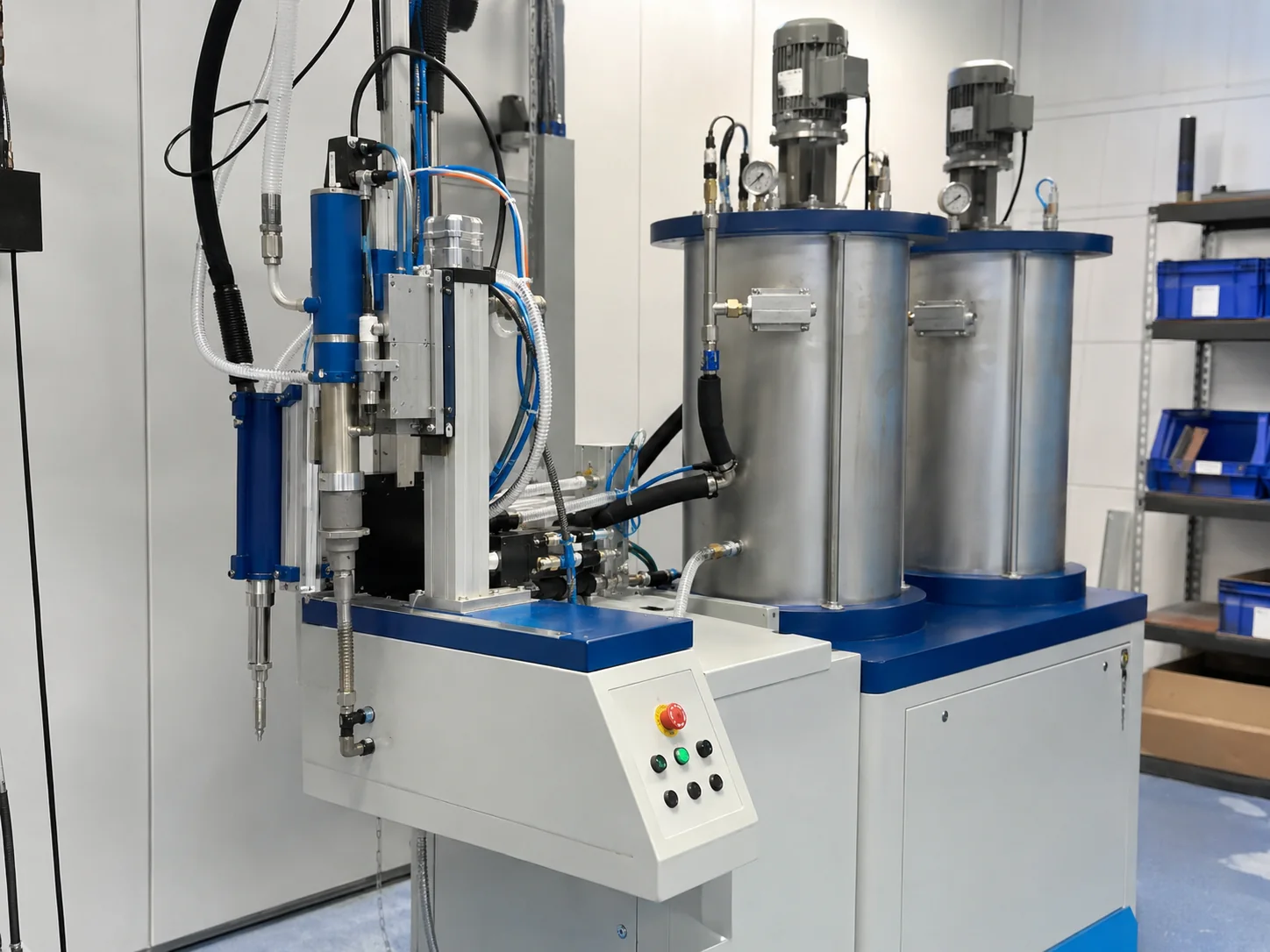
Material viscosity, fillers, 1K/2K chemistry, cure method, working time and temperature determine the fluid handling architecture.
2K structural bonding, potting, encapsulation. / 双液结构粘接、灌封、封装。
Sealing, thermal, electronics protection. / 密封、导热、电子防护。
Flexible bonding and encapsulation. / 柔性粘接与灌封。
Fast curing optical and electronics assembly. / 光学、电子快速固化。
Thermal grease, gel and gap-filling materials. / 导热脂、导热凝胶、填隙材料。
Gasketing, housing sealing and moisture protection. / 壳体密封、防水防潮。
Low viscosity flows easily; high viscosity often needs pump pressure, larger passages or screw/piston metering.
Abrasive or thermally conductive fillers influence valve and pump choice.
2K ratio stability and working time determine metering and mixing design.
Heat, UV, moisture or room-temperature cure changes handling and cleaning requirements.
Micro dots, continuous beads and high-volume potting require different fluid technologies.
Potting and bubble-sensitive processes may require material conditioning or vacuum steps.
Materials with the same chemistry can behave differently by brand, filler content and working time. TDS and sample testing are recommended before final configuration.