MATERIALS
胶水与材料适配
按粘度、填料、单/双液、固化方式、可操作时间和温度条件选择供胶、阀体与混胶方式。
EpoxySiliconePUUVThermalSealant
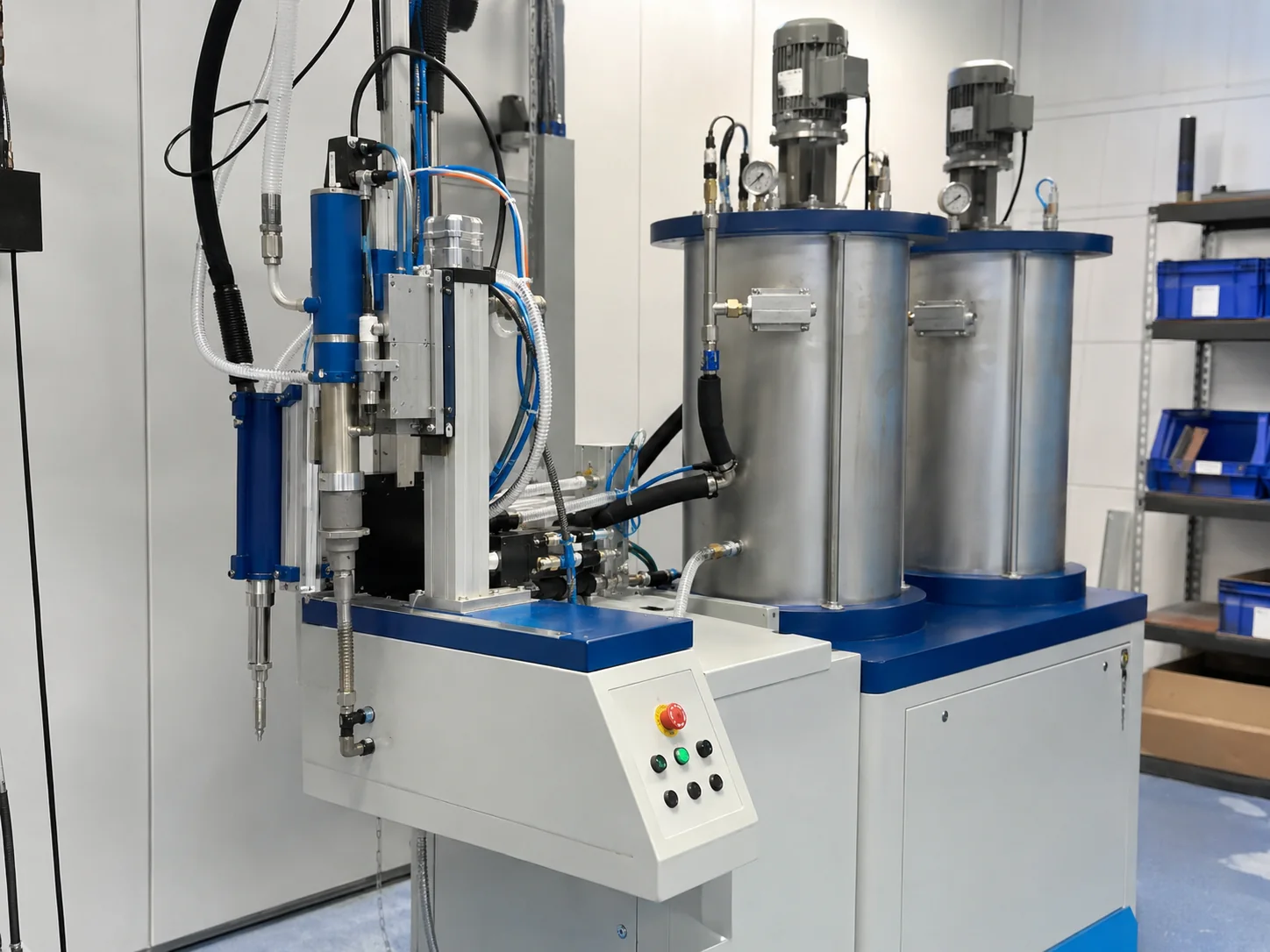
按粘度、填料、单/双液、固化方式、可操作时间和温度条件选择供胶、阀体与混胶方式。
2K structural bonding, potting, encapsulation. / 双液结构粘接、灌封、封装。
Sealing, thermal, electronics protection. / 密封、导热、电子防护。
Flexible bonding and encapsulation. / 柔性粘接与灌封。
Fast curing optical and electronics assembly. / 光学、电子快速固化。
Thermal grease, gel and gap-filling materials. / 导热脂、导热凝胶、填隙材料。
Gasketing, housing sealing and moisture protection. / 壳体密封、防水防潮。
Low viscosity flows easily; high viscosity often needs pump pressure, larger passages or screw/piston metering.
Abrasive or thermally conductive fillers influence valve and pump choice.
2K ratio stability and working time determine metering and mixing design.
Heat, UV, moisture or room-temperature cure changes handling and cleaning requirements.
Micro dots, continuous beads and high-volume potting require different fluid technologies.
Potting and bubble-sensitive processes may require material conditioning or vacuum steps.